
Yes, Uttar Pradesh is one of the suitable states for rooftop solar installation because it receives good sunlight throughout the year. With increasing electricity tariffs and frequent power usage in homes and businesses, solar helps customers reduce dependency on traditional electricity. Solar systems are especially beneficial for households, shops, schools, factories, hospitals, and offices looking for long-term savings and energy security.
The savings depend on your monthly electricity consumption and the size of the solar system installed. In many cases, customers in Uttar Pradesh can reduce their electricity bills by 80–90%. A properly designed solar system generates electricity during the daytime, which directly reduces the units consumed from the grid. Over time, this leads to significant financial savings for both residential and commercial users.
Yes, government subsidy benefits are available for residential rooftop solar systems under approved schemes. The subsidy amount depends on the solar capacity and current government policies. Customers can reduce their installation cost significantly by applying through authorized vendors and approved processes. Commercial and industrial projects generally do not receive subsidies but still benefit from strong long-term savings.
The roof space requirement depends on the capacity of the solar plant. Generally, a 1 kW solar system requires approximately 80–100 sq. ft. of shadow-free rooftop area. Larger systems need more space. The rooftop should receive direct sunlight for maximum performance and should ideally remain free from shade caused by nearby buildings, trees, or water tanks.
Standard on-grid solar systems automatically shut down during power cuts for safety reasons because they are connected to the electricity grid. However, if you require electricity backup during outages, a hybrid solar system with battery storage is a better option. Hybrid systems can store solar energy and provide backup power during load shedding or grid failures, which is especially useful in areas facing regular power cuts.
Yes, solar systems are highly suitable for homes and businesses across cities and towns in Uttar Pradesh, including Agra, Aligarh, Lucknow, Kanpur, Mathura, Noida, and nearby rural areas. Whether you own an independent house, shop, school, office, or factory, solar can help reduce electricity expenses and increase energy efficiency.
Most high-quality solar panels come with a performance warranty of up to 25 years. Solar systems are designed for long-term use and continue generating electricity efficiently for decades. Although panel efficiency may reduce slightly over time, they still provide reliable power generation for many years when maintained properly.
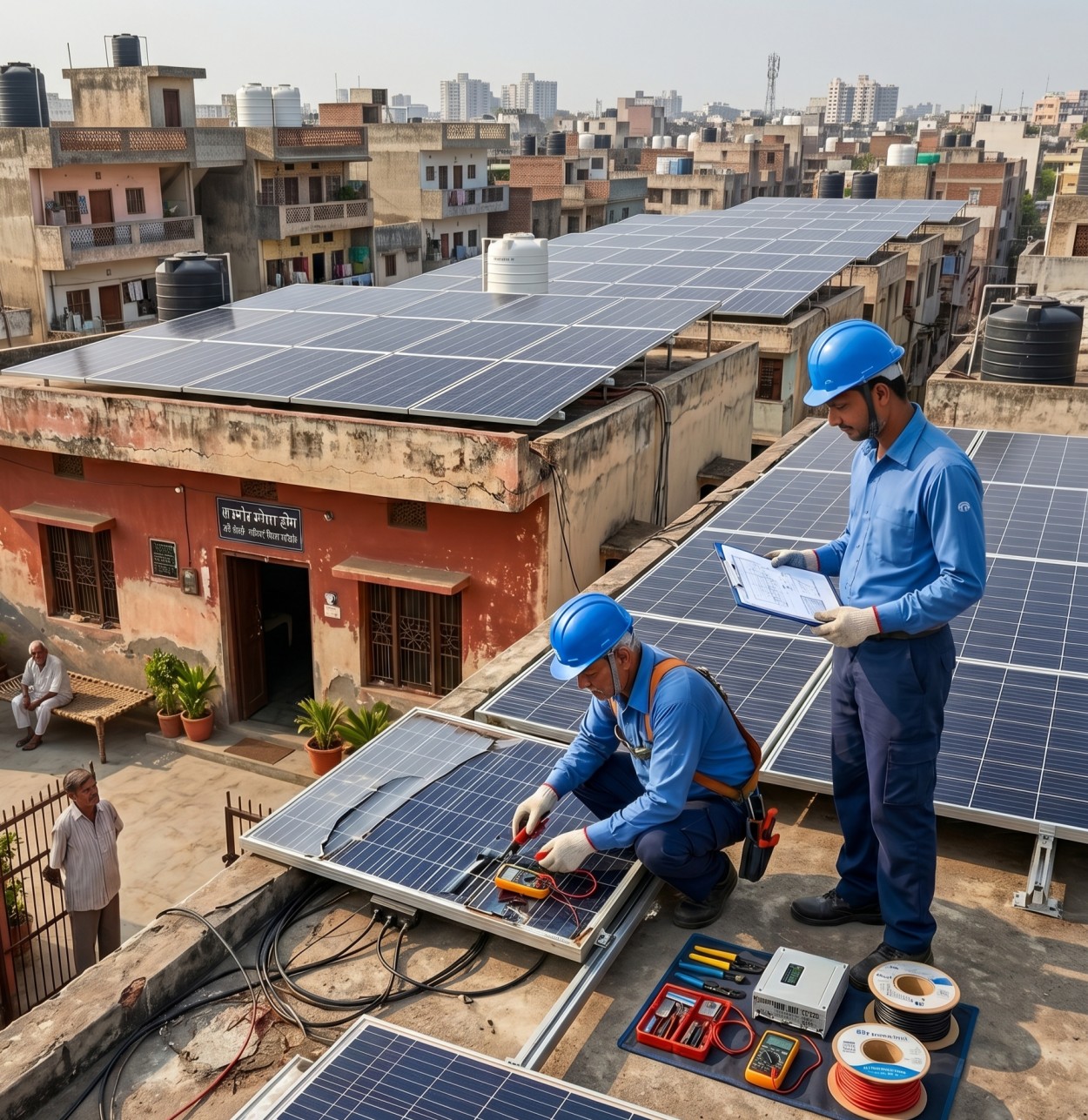
Solar systems require very low maintenance compared to other power solutions. Regular cleaning helps maintain efficiency by removing dust, dirt, and bird droppings from the panel surface. In Uttar Pradesh, cleaning the panels every few weeks or months depending on dust conditions is usually sufficient. Periodic inspection of wiring and system components also helps ensure smooth performance.
Yes, solar systems can support heavy electrical appliances such as air conditioners, refrigerators, washing machines, water pumps, coolers, and office equipment. The system size should be properly planned according to your electricity load and daily usage. Commercial solar systems can also handle industrial machinery and high-capacity electrical operations.
Net metering is a billing mechanism that allows solar users to export extra electricity generated by their solar system back to the electricity grid. The exported units are adjusted against the electricity imported from the grid, reducing the final electricity bill. This system helps customers maximize savings and improve the overall return on investment from solar installation.
The actual installation process for most residential solar systems is usually completed within 1–3 days after site inspection, approval, and documentation. Larger commercial and industrial projects may take longer depending on the system size and project requirements. The timeline can also vary based on net metering approvals and local electricity department procedures.
Yes, solar panels continue to generate electricity during monsoon and cloudy weather conditions. Although electricity generation may be slightly lower compared to bright sunny days, the system still produces power efficiently. Modern solar panels are designed to perform under different weather conditions and can withstand rain, humidity, and heat.
Yes, professionally installed solar systems are completely safe for rooftops. The mounting structure is designed to securely hold the solar panels without damaging the building. In many cases, solar panels also provide additional protection to the roof from direct sunlight and weather exposure. Proper installation by experienced professionals ensures structural safety and long-term reliability.
Absolutely. Solar energy is highly beneficial for factories, warehouses, schools, hospitals, hotels, offices, and commercial buildings with high electricity consumption. Businesses can significantly reduce operational costs by generating their own electricity. Industrial solar systems also help companies improve sustainability and reduce dependence on rising electricity tariffs.
With rising electricity costs and increasing energy demand, solar energy offers a smart and sustainable solution for customers in Uttar Pradesh. Solar helps reduce monthly electricity bills, provides long-term financial savings, supports energy independence, and contributes to a cleaner environment. By switching to solar, customers invest in a reliable energy source that delivers benefits for decades while supporting a greener future.
Starfield Team
Solar Advisor
Prashant
Hey, how can I help you today?
Powered by Elementor

